
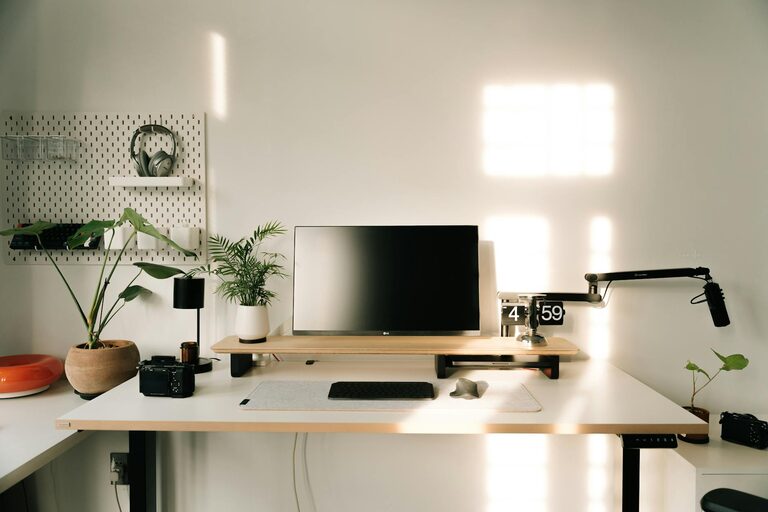
Creating a productive home office space can significantly improve your work performance and overall well-being. Whether you’re working remotely full-time or just occasionally from home, a well-organised and comfortable workspace helps maintain focus, reduce stress, and separate work life from personal life.
In this guide, we’ll explore essential tips to help you design a home office that supports productivity while reflecting your personal style and needs.
1. Choose the Right Location
Find a Quiet Spot
Select a space in your home where interruptions are minimal. Ideally, choose a room or corner that is away from high-traffic areas such as kitchens or living rooms.
Consider Natural Light
Natural daylight improves mood and reduces eye strain. Place your desk near a window if possible, but avoid glare on your computer screen.
Think About Ventilation and Temperature
Ensure your workspace is well-ventilated and maintains a comfortable temperature. Stuffy or overly warm rooms can make it difficult to concentrate.
2. Invest in Ergonomic Furniture
Quality Desk and Chair
Your desk should be spacious enough for all your essentials. A good chair with adjustable height, lumbar support, and comfortable cushioning helps prevent back pain and fatigue.
Proper Monitor Height
Position your monitor at eye level to avoid neck strain. You can use a monitor stand or adjustable arm to achieve this.
Organise Your Desk Layout
Keep items you use frequently within reach. A clutter-free desk supports a clear mind.
3. Plan Your Lighting
Combine Natural and Artificial Light
Even with natural light, have a good desk lamp for cloudy days or late working hours. Choose lighting that doesn’t cast shadows on your workspace.
Consider Warm and Cool Light
Warm light can create a cosy atmosphere, ideal for creative work, while cooler light tends to improve alertness and is good for tasks requiring focus.
4. Use Efficient Storage Solutions
Declutter with Storage Boxes and Drawers
Keep papers, cables, and supplies organised using labelled boxes, filing cabinets, or desk drawers.
Vertical Storage
Shelves and wall organisers help maximise space without crowding your desk.
Digital Organisation
Minimise paper clutter by scanning important documents and organising digital files regularly.
5. Personalise Your Space
Add Plants
Greenery improves air quality and can have a calming effect.
Display Inspiring Items
A few motivational quotes, artwork, or photos can boost your mood.
Keep It Tidy
Regularly clear your workspace to maintain a feeling of order and pride in your work environment.
6. Set Boundaries and Create Routine
Define Work Hours
Even at home, having set hours signals to yourself and others when you’re working.
Minimise Distractions
Use noise-cancelling headphones or play background music if it helps your concentration.
Separate Work and Leisure Areas
If possible, avoid working on your bed or couch to help your brain associate your home office with productivity.
7. Ensure Reliable Technology
High-Speed Internet
A stable internet connection is essential for remote meetings and accessing cloud resources.
Backup Power Solutions
Consider a surge protector or backup battery to protect your devices and avoid interruptions.
Keep Essentials Handy
Have chargers, headphones, and any other tools you need close by to avoid frequent disruptions.
8. Maintain Your Well-being
Take Regular Breaks
Stand up, stretch, or walk around to reduce muscle tension and refresh your mind.
Stay Hydrated and Snack Wisely
Keep a water bottle nearby and choose healthy snacks to maintain energy levels.
Practice Mindfulness or Quick Exercises
Incorporate short meditation or breathing exercises to help manage stress.
—
Designing a productive home office is about creating a space that encourages focus, comfort, and well-being. By paying attention to location, furniture, lighting, organisation, and your personal work habits, you can transform any corner of your home into an effective workspace. Remember that your home office is a reflection of your work style, so adapt these tips to what suits you best. With the right environment, working from home can become not only productive but also enjoyable.